

Perverse Comfort
Supreme Court permits racial profiling in Spanish-speaking, migrant-heavy communities

I was having coffee with a colleague yesterday when the Supreme Court gave its blessing to racial profiling by immigration agents. Just two Latinos sitting at a café on Ohio State’s campus drinking un cafecito – and speaking entirely in Spanish. Wearing jeans and a guayabera that I bought in Mexico City, I found comfort in the reality that I work in a predominantly white space. Had I been somewhere else, it would be “common sense” to suspect me of violating U.S. immigration law, Justice Brett Kavanaugh wrote.
Kavanaugh’s common sense is my fear.
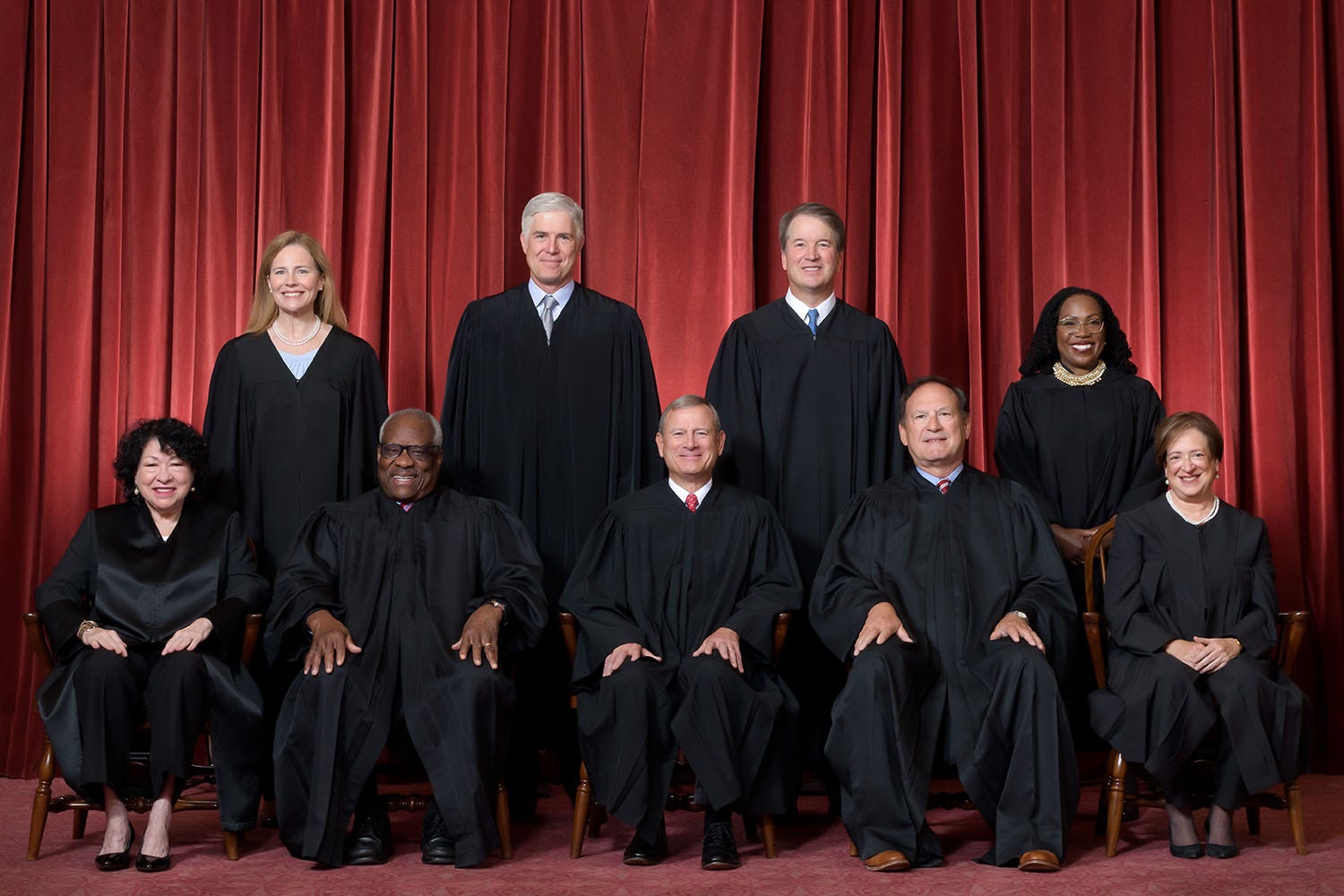
In a split decision in Noem v. Vasquez Perdomo, the justices sided with the Trump administration’s immigration law enforcement tactics in the Los Angeles region. A lower court judge in L.A. had blocked immigration agents from stopping people based on four factors: “apparent race or ethnicity”; “speaking Spanish or speaking English with an accent”; “presence at a particular location”; and the “type of work one does.” The U.S. Court of Appeals for the Ninth Circuit allowed the judge’s order to stand while legal proceedings moved forward. Both courts had concluded that the federal government’s tactics amounted to racial profiling likely prohibited by the Fourth Amendment.
Yesterday’s decision lets the Trump administration consider how a person looks, the language they are speaking, where they are, and what job they do in deciding who might be in the United States in violation of federal immigration law. The court considered the case on its emergency docket, at the Justice Department’s request, without hearing oral arguments and on a quick timeline. The five rightwing justices issued a one-paragraph order – common in emergency requests – staying the temporary restraining order that the lower court in L.A. announced in July. At only four sentences, their order does not offer any reasons for backing the Trump administration. The lawsuit remains ongoing in an L.A. federal court.
Dissenting from the majority’s announcement, Justice Sonia Sotomayor called the court’s decision “a grave misuse” of the emergency docket. Justices Elena Kagan and Ketanji Brown Jackson joined Sotomayor. “We should not have to live in a country where the Government can seize anyone who looks Latino, speaks Spanish, and appears to work a low wage job,” Sotomayor wrote.
Kavanaugh, who voted with his colleagues on the right but wrote separately to explain his reasoning, thinks what a person looks like, language they speak, work they do, and location they occupy are fair game for immigration agents. A 1975 decision, United States v. Brignoni-Ponce, supports the government’s position that immigration agents can consider these factors, Kavanaugh explained. In Los Angeles and nearby counties, where the challenged arrests occurred, “there is an extremely high number and percentage of illegal immigrants…those individuals tend to gather in certain locations to seek daily work…in certain kinds of jobs, such as day labor, landscaping, agriculture, and construction, that do not require paperwork” and many “do not speak much English.”
¿Y ICE cómo sabe si hablo mucho inglés? Kavanaugh doesn’t bother to explain how ICE knows whether I speak much English. Language ability isn’t something an immigration agent sees when they jump out of the back of a Penske truck, as they did in L.A. this summer. It’s not something they learn when they run up on a group of men outside a Winchell’s donut shop in Pasadena. Would an immigration agent who hears me ask whether I’m speaking Spanish because I want to or because I have no choice? They didn’t bother to ask Jorge Luis Hernández Viramontes about his English ability. When ICE agents showed up at the carwash that he manages and Viramontes asked for a warrant, they instead responded with language that can be understood without speaking much English: “Shut the fuck up.”
Nor does Kavanaugh explain how immigration agents know what job someone does. People violating immigration law drift toward jobs “that do not require paperwork,” Kavanaugh claims. There aren’t any jobs in the United States that don’t require paperwork, but perhaps that’s not what Kavanaugh meant. Perhaps he instead meant to say that there are some jobs where the employment verification requirement is flouted more often than in other sectors of the labor market. If that’s what he meant, his explanation could benefit from more precise use of English.
Whatever he meant, the effect of Kavanaugh and his rightwing colleagues’ decision is to authorize immigration agents to figure out what work people like me do for a living. Brignoni-Ponce, the 1975 decision that Kavanaugh points to for support, tells us one way they might do that. Border Patrol agents can turn to “such factors as the mode of dress and haircut” to gauge immigration law violations, the justices explained. Style has constitutional implications. Would ICE agents see my shirt, with its intricate needlework that suggests, as is correct, that I didn’t buy it at Macy’s and decide that I’m a tenured law professor who holds an endowed chair? I’m a rare breed in U.S. higher education. Only three percent of full-time faculty at U.S. colleges and universities are Latino, so I couldn’t blame them for not guessing correctly.
That’s why the Fourth Amendment should require more than hunches. Away from the border, that’s what the Fourth Amendment has long required. Since 1968, the Supreme Court has taken the position that law enforcement officers must point to specific information that a specific person has done something wrong before they stop that person to question them. Without that, they don’t have reasonable suspicion to keep people from going about their business, even briefly.
But the border is different. At the border (and international airports that function much like the border), immigration agents have been permitted to stop everyone for questioning. Within 100 miles of the border, Brignoni-Ponce has long allowed agents to consider “Mexican appearance” among the factors that they can weigh to decide if a vehicle should be stopped and its passengers questioned. As of yesterday, immigration agents can meet that constitutional requirement with nothing more than what job someone looks like they do, the language they’re speaking, and where they are.
Sitting at the campus café, I could breathe a bit more easily than if I was in the neighborhood I live in. Or the border city I grew up in. Or Chicago, where I once lived. Or L.A., where I’ve often traveled. The privilege of being protected by the whiteness around me is a perverse source of comfort. It may be all I have.